How Serious JEE/NEET Aspirants Actually Use PYQs
PYQs are not just practice questions. They are one of the clearest preparation signals.
PYQs are one of the most valuable resources for competitive exam preparation.
But most students use them incorrectly.
They solve questions randomly, track nothing, and move on.
Strong aspirants usually treat PYQs very differently.
PYQs Are Not Just Practice Questions
Previous Year Questions reveal:
- exam patterns
- topic importance
- question framing
- difficulty trends
- recurring concepts
But beyond that, they also reveal something else: your actual preparation level.
PYQs expose:
- weak concepts
- lack of revision
- poor retention
- time management problems
- overconfidence
This makes them one of the clearest indicators of exam readiness.
Common Mistakes Students Make
Many aspirants:
- solve questions randomly
- never revisit mistakes
- focus only on quantity
- avoid tracking accuracy
- repeat the same errors
- solve inconsistently
This creates the illusion of progress.
A student may solve hundreds of questions while learning very little from them.
What Toppers Usually Do Differently
Students who improve consistently often use PYQs as a feedback system.
They:
- analyze recurring mistakes
- revisit weak chapters
- monitor accuracy trends
- track consistency
- identify patterns in errors
- revise based on performance data
For them, every PYQ becomes useful beyond just one attempt.
Why Tracking Matters
Without tracking:
- mistakes disappear
- weak topics stay hidden
- revision becomes random
- confidence becomes emotional
Tracking creates preparation visibility.
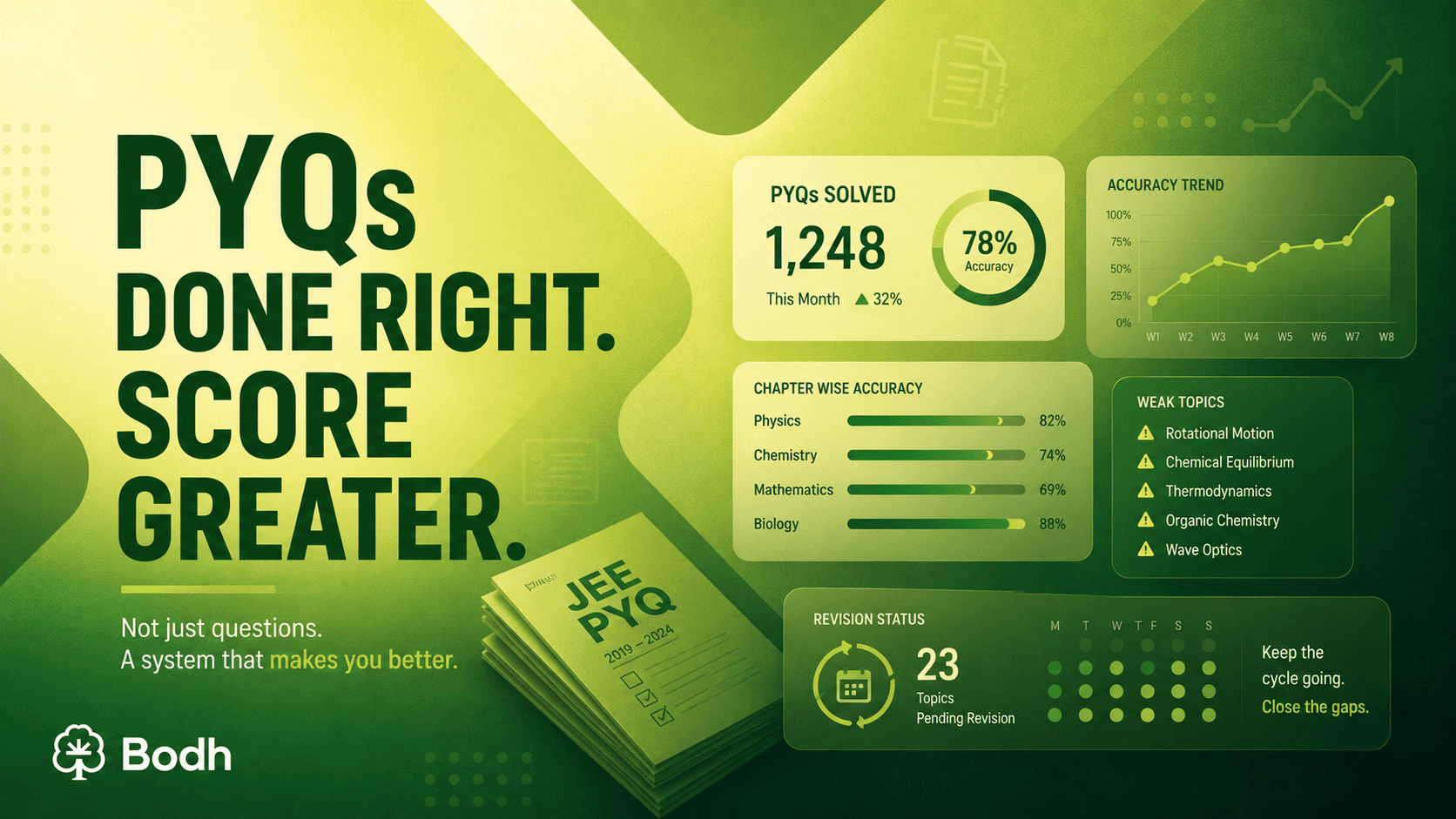
Students can begin to see:
- chapter-wise strengths
- weak areas
- solved question history
- revision gaps
- improvement trends over time
This makes preparation far more structured.
Consistency Matters More Than Intensity
Many students depend on motivation spikes.
A few highly productive days followed by inconsistency.
But competitive exams reward sustained preparation.
Small repeated improvements:
- compound over months
- strengthen retention
- improve speed
- reduce panic before exams
Consistency is usually more important than occasional intensity.
How Bodh's Solve Module Works
Bodh's Solve module is designed around measurable preparation.
Students can:
- solve PYQs online
- track solved questions
- monitor progress trends
- identify weak chapters
- revisit mistakes
- build revision systems around actual performance
This creates a preparation history students can learn from over time.
Instead of solving blindly, preparation becomes trackable and structured.

Final Thoughts
PYQs become powerful when they are part of a system.
Not just a pile of questions.
The goal is not solving the most questions.
The goal is making every solved question improve future performance.
Enjoyed this article?